By the Lalwani Mother and Child Care team, Pune | Author & medically reviewed by: Dr. Siddhant Lalwani | Last reviewed: October 2026
| Quick answers
• Can firecrackers trigger asthma? Yes. Firecracker smoke carries fine particles, gases and metal salts that can irritate a child’s airways and set off cough, wheeze and breathlessness. • Who is most affected? Children with asthma or frequent wheeze, and young children in general, because their airways are smaller. • Main protection: keep your child away from smoke, stay indoors with windows closed during peak hours, give the controller medicine on schedule and keep the reliever inhaler within reach. • Emergency signs: blue or grey lips, trouble speaking, skin pulling in between the ribs, or no relief from the reliever. Go to the emergency department now. • Dates: Diwali is on Sunday, 8 November 2026. |
Diwali is a festival for the whole family, and most children with asthma can enjoy it with some preparation. The trouble is the smoke. This guide explains how Diwali pollution and asthma in children are linked, what an attack looks like, how to protect kids from pollution, what to know about N95 masks, and when to see a doctor. It is for health education and does not replace your child’s own asthma plan.
Can firecrackers trigger asthma?
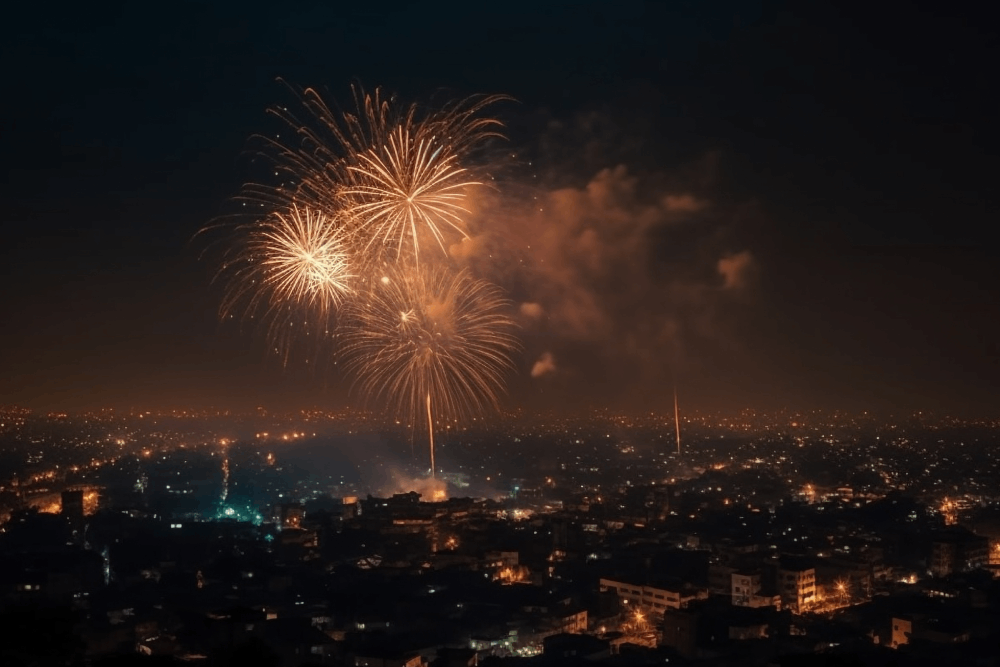
Yes, firecracker smoke can trigger asthma. Burning crackers releases fine particles (PM2.5 and PM10), sulphur dioxide and other gases, and metal salts such as aluminium, manganese and cadmium. Breathing these irritates the airways. In a child with asthma, the airways can swell and narrow, causing cough, wheeze and breathlessness.
Children are more affected than adults because they breathe faster, have narrower airways and spend more time outdoors playing. The Central Pollution Control Board (CPCB) lists children under 14 and people with asthma among the groups most susceptible to air pollution.
For balance, the evidence is mixed in places. In the CPCB’s 2017 assessment in Delhi, particle levels were well above standards on Diwali, but its symptom and hospital-admission data were not statistically conclusive, and it called for larger studies. The practical advice stays the same: children with asthma are safer kept away from smoke.
Pune air quality Diwali: what the data shows
Pune’s air quality worsens after Diwali. On the day after Lakshmi Puja in 2024, CPCB readings at several Pune stations were in the “poor” band, and others were in the “moderate” band, which can cause breathing discomfort in children and older adults.
| Pune station | AQI (day after Lakshmi Puja, 2024) | Band |
| Savitribai Phule Pune University | 298 | Poor (201 to 300) |
| Hadapsar | 281 | Poor (201 to 300) |
| Shivajinagar | 254 | Poor (201 to 300) |
| Karve Road | 209 | Poor (201 to 300) |
| Panchvati | 196 | Moderate (101 to 200) |
| Bhumkar Nagar | 174 | Moderate (101 to 200) |
| Mhada Colony, Lohgaon | 154 | Moderate (101 to 200) |
These are readings from a single day in 2024, reported by Punekar News from CPCB data. They show that smoke lingers well past the night itself. Check the live AQI before school runs and outdoor play this year.
Diwali firecracker rules in Pune
Pune Police’s Diwali 2026 notice, reported on 24 October 2026, bans noise-producing firecrackers between 10 pm and 6 am. It bans bursting firecrackers on roads and within 10 metres of them. It bans all firecrackers within 100 metres of hospitals, educational institutions and courts. Temporary firecracker sale licences run from 6 November to 5 December 2026. Rules can change, so check the latest order, and call 112 to report a violation.
Even permitted fireworks produce smoke. Green crackers are designed to release less particulate matter, but they still produce smoke.
Asthma triggers in children
Asthma triggers are things that irritate the airways and set off symptoms. They differ from child to child. Common ones include:
- Viral colds and flu
- Dust and dust mites
- Smoke from firecrackers, tobacco, incense, mosquito coils or burning waste
- Air pollution
- Pollen and mould
- Cold air and weather changes
- Exercise, especially in cold or polluted air
- Strong smells from perfumes, paints and cleaning products
- Pet dander
Diwali brings several triggers at once: firecracker smoke, dust from house cleaning, incense and diya smoke, strong fragrances, and cooler, more polluted air as winter begins. Our childhood asthma guide covers causes, diagnosis and everyday management in more detail.
Asthma attack symptoms in children
Early signs of an asthma flare-up in a child include a cough (often at night or during play), wheezing, fast or noisy breathing, chest tightness and tiring quickly. In a serious attack, breathing becomes laboured, the child may struggle to speak, and the skin may pull in between the ribs or at the neck.
| Stage | What you see | What to do |
| Early warning | A cold or cough, wheeze, shortness of breath, symptoms at night or during play | Follow your child’s asthma action plan: continue the controller and give the reliever. See your doctor if the reliever is needed every 4 hours or symptoms are not improving. |
| Emergency | Skin pulling in between the ribs or at the neck, non-stop cough or wheeze, trouble speaking in full sentences, blue or grey lips or nails, very tired or limp, or no relief 15 to 20 minutes after the reliever | Go to the nearest emergency department or call an ambulance now. Take the action plan and the medicines with you. |
Your own doctor’s written plan decides the exact medicine and doses. If your child does not have a written plan, ask for one at the next visit.
How to protect kids from pollution this Diwali
Before Diwali (this week)
- Review the asthma plan. If your child has asthma, book a visit to update the written action plan and check inhaler and spacer technique.
- Check medicines. Make sure the controller, the reliever and the spacer are in date and not running low. Keep a note of doses where anyone caring for your child can find it.
- Ask about the flu vaccine. Viral infections are a common trigger. Read why the flu vaccine matters for children.
- Cut dust during Diwali cleaning. Damp-wipe surfaces instead of dry sweeping, and keep your child out of the room while you clean.
- Plan the celebration. Lights, rangoli, sweets and family time carry no smoke. Let adults handle any fireworks, away from your child.
On Diwali days
- Check the live AQI before outdoor plans, and keep your child indoors during the evening when most crackers are burst and the morning after.
- Keep windows and doors closed in the evening. A HEPA air purifier in the room where your child spends most time can lower indoor smoke particles.
- Stay at a distance if you watch fireworks, and stay upwind of the smoke.
- Limit indoor smoke. Avoid incense, dhoop, mosquito coils and many candles or diyas in the child’s room.
- Give the controller medicine on schedule, even if your child feels well. Carry the reliever and spacer when you go out.
After smoke exposure
- Have your child wash their hands and face and change clothes after being outdoors.
- Watch for night cough, wheeze or faster breathing over the next few days.
- Keep outdoor play for later in the day, once the air has cleared.
N95 mask for children: do they help?
A child-size N95 respirator that fits well filters more smoke particles than a cloth or medical mask. It is not a substitute for staying away from smoke, and it does not suit every child. Public health guidance for smoke events in Canada (Manitoba) sets these age limits:
| Child’s age | Mask guidance |
| Under 2 years | No masks. There is a risk of suffocation. |
| 2 to 3 years | Medical mask or 3-layer cloth mask |
| 4 years and older | Child-size N95 respirator (most are labelled for ages 4 to 10) |
- An adult should supervise a child wearing a mask, and a child should never wear one while sleeping.
- Take the mask off if your child gets hot, distressed or struggles to breathe.
- An adult-size mask will not seal on a small face, so it protects less.
- If your child has asthma, ask your pediatrician before using an N95, because a mask can make breathing feel harder.
Child coughing after Diwali: what to do
A cough after Diwali is common. Smoke irritates the throat and airways, and the change of season brings viral infections. It needs attention if there is wheezing, fast breathing, a cough that wakes your child at night, or a cough that is not settling after a few days.
| What you notice | What to do |
| Mild dry cough, no wheeze, playing normally | Keep your child indoors in cleaner air, offer plenty of water and watch for 24 to 48 hours. Avoid cough syrups for young children unless your doctor advises them. |
| Wheeze, fast or laboured breathing, skin pulling in, trouble feeding or speaking, or the reliever needed again and again | See a doctor the same day. Use emergency care for the signs in the emergency row above. |
| Cough lasting longer than about a week, disturbing sleep, or brought on by play | Book a visit. Repeated cough or wheeze after smoke, dust or exercise can be a sign of asthma that has not been diagnosed. |
Our guide on when a child’s cough needs a doctor explains more.
Asthma treatment for children in Pune: care at Lalwani Mother and Child Care
Childhood asthma is managed with a plan built around two kinds of medicine: a daily controller that keeps the airways calm, and a reliever for flare-ups. Inhalers are given through a spacer, with a face mask for younger children, so the medicine reaches the lungs. Avoiding triggers and regular review are part of the plan.
If you are looking for asthma treatment for children in Pune, or a pediatric pulmonologist in Pune, our pediatric pulmonology service treats children with asthma, chronic cough and recurrent chest infections. Pediatric pulmonary function testing and allergy testing are listed among the tests it offers. Our pediatrics and NICU and PICU services are at the same hospital, and emergency services are available 24 hours. You can read about each consultant on the doctors page if you want a child asthma specialist in Pune for your family.
| Address | Pune Satara Road, Opposite NEXA Showroom, Near Chandukaka Saraf, Pune 411 009 |
| Phone | 020 68686868 (hospital) or +91 9145621716 (pediatric pulmonology) |
| Hours | Monday to Sunday, 8:00 am to 9:00 pm. 24-hour emergency services available |
When to go to the emergency department
Go to the nearest emergency department or call an ambulance right away if your child has:
- Constant wheezing or a cough that does not settle with the reliever
- Trouble speaking in full sentences
- Skin pulling in between the ribs, below the ribs or at the neck when breathing
- Blue or grey lips or fingernails
- A reliever that does not help within 15 to 20 minutes, or help that wears off quickly
- Unusual sleepiness or limpness
Frequently asked questions
1. Can firecrackers trigger asthma?
Yes. Firecracker smoke contains fine particles, sulphur dioxide and metal salts that irritate the airways. In a child with asthma this can cause cough, wheeze and breathlessness, sometimes within hours. Children with asthma are safer kept indoors and away from smoke during Diwali.
2. What are the symptoms of an asthma attack in children?
Common signs are cough, wheeze, fast or noisy breathing, chest tightness and tiring quickly. In a serious attack the child struggles to speak, the skin pulls in between the ribs or neck, and the lips may turn blue or grey. This needs emergency care.
3. Are N95 masks safe for children?
Only child-size N95 respirators suit children, usually from age 4. Children under 2 should not wear masks, and no child should wear one while sleeping. An adult should supervise. If your child has asthma, check with your pediatrician before using one.
4. How can I protect my child from Diwali pollution?
Check the live AQI, keep your child indoors with windows closed during the evening and the morning after, and use a HEPA purifier if you have one. Give the controller medicine on schedule and keep the reliever and spacer within reach.
5. Why is my child coughing after Diwali?
Smoke irritates the throat and airways, and seasonal viral infections are common at this time. Watch for wheeze, fast breathing or a cough that wakes your child at night. See a doctor if it lasts beyond about a week or if breathing is affected.
6. Does a HEPA air purifier help?
A HEPA purifier running in the room where your child spends most time, with windows closed, can lower smoke particles indoors. It works alongside, not instead of, keeping your child away from smoke and giving prescribed medicines on time.
7. Should my child with asthma skip Diwali?
No. Most children with asthma can enjoy lights, rangoli, sweets and family time with some preparation. Keep them away from firecracker smoke, keep medicines on schedule, and review the asthma action plan with your doctor before the festival.
8. When should I take my child to the emergency room?
Go right away for blue or grey lips, trouble speaking, skin pulling in between the ribs, non-stop wheeze or cough, or a reliever that does not help within 15 to 20 minutes. Take your child’s action plan and medicines.